Butte County Probate Court handles legal matters related to estates, wills, trusts, guardianships, and the transfer of property after a person’s death. The court reviews probate petitions, appoints estate representatives, and oversees probate hearings in Butte County to help move estate cases through the legal process. Families often turn to the probate division when an estate requires court supervision or when questions arise about a will, inheritance rights, or asset distribution. The court record may include filings, notices, petitions, orders, and hearing dates connected to estate administration. Probate proceedings help create a legal framework for settling financial matters, transferring ownership interests, and resolving estate-related issues under California law.
Probate hearings in Butte County may involve validating a will, appointing an executor, identifying heirs, reviewing creditor claims, and approving final estate distributions. A probate judge examines submitted documents and makes decisions based on state probate requirements and the facts presented in each case. Estate administration can vary depending on estate size, asset types, beneficiary information, and any disputes between interested parties. Some probate matters move through the court with limited hearings, while contested cases may require additional review and court appearances. For many estates, the Butte County Probate Court serves as the central location for handling legal estate matters and completing the probate process from filing through final distribution.
What is the Butte County Probate Court?
Butte County Probate Court is a specialized legal division managing estate settlement and protective proceedings. The probate court ensures that the deceased’s assets reach the correct beneficiaries.
Purpose of Probate Court
The primary purpose involves validating wills and authorizing estate administration. The court confirms the authenticity of a deceased person’s will. If no will exists, the court decides how to distribute assets. The court protects vulnerable people. It appoints guardians for minors and conservators for adults who cannot manage their own affairs. This legal oversight prevents fraud and mismanagement. The court keeps the process fair for everyone. Judges listen to all sides before making decisions. The court issues legally binding orders. These orders carry the full weight of California law.
Types of Probate Matters Handled
Butte County Probate Court handles several distinct legal issues. These include:
- Estate settlement for deceased people
- Guardianship for minors
- Conservatorship for incapacitated adults
- Trust administration and disputes
- Inheritance disputes among family members
Each matter requires specific legal filings and court appearances. The court supervises these processes from start to finish. The court handles small estates using simplified procedures. Large estates require formal probate proceedings. The court evaluates the complexity of each case.
Why Probate Court Is Important
Probate court protects the wishes of the deceased and the rights of beneficiaries. Without this court, families might argue over property indefinitely. The court provides a neutral legal space to resolve conflicts. It guarantees that creditors receive proper notice and payment before beneficiaries receive assets. This legal supervision guarantees transparency. It holds executors accountable for their actions. Executors must follow court orders precisely. This oversight gives families peace of mind during difficult times. The process guarantees legal finality for everyone involved. Beneficiaries know they received their rightful share under the law. The court prevents executors from hiding assets or ignoring debts.
| Probate Matter | Primary Focus | Key Participants |
|---|---|---|
| Estate Administration | Settling debts and distributing assets | Executor, Beneficiaries |
| Guardianship | Protecting minors | Guardian, Minor |
| Conservatorship | Protecting incapacitated adults | Conservator, Conservatee |
| Trust Disputes | Resolving trustee conflicts | Trustee, Beneficiaries |
Probate Cases Handled by Butte County Probate Court
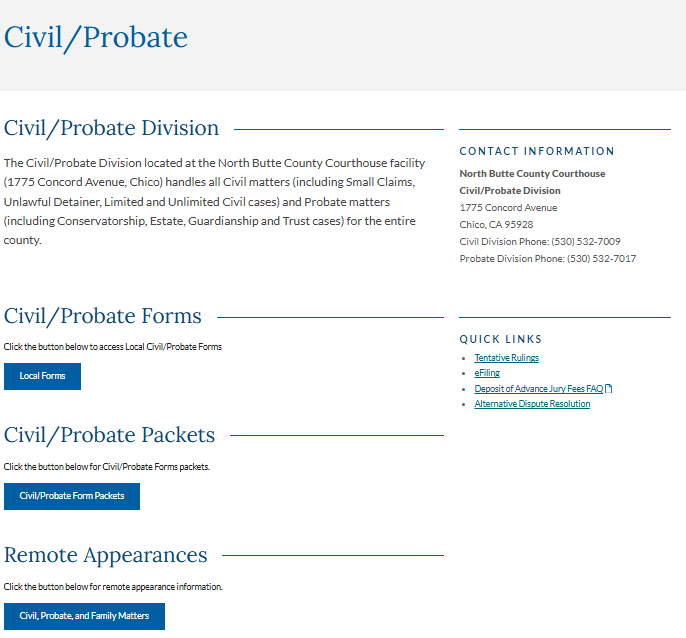
Butte County Probate Court handles a wide range of probate cases, including estate administration, guardianships, conservatorships, trust disputes, and inheritance-related conflicts. These probate proceedings help manage property https://www.butte.courts.ca.gov/divisions/civilprobate, protect vulnerable people, and resolve legal issues involving estates and trusts. Probate Court plays a key role after a person passes away or when someone needs legal protection for personal or financial matters. The court reviews documents, oversees legal filings, and helps settle disputes involving estate assets, beneficiaries, trustees, and family members.
Estate Administration Cases
One of the most common probate cases involves estate administration. After a person dies, the court may appoint a personal representative or executor to manage the estate and carry out the wishes stated in a will.
Estate administration often includes:
- Identifying and valuing estate assets
- Paying debts and taxes
- Managing property transfers
- Distributing assets to heirs and beneficiaries
- Filing required court documents
These probate proceedings create a legal process for transferring ownership and closing an estate properly.
Guardianship Cases
Guardianship matters involve minors who need someone to make personal or legal decisions on their behalf. The court reviews petitions and determines whether appointing a guardian serves the child’s best interests.
Guardianship situations include:
- Parents who are unable to care for a child
- Long-term absence of a parent
- Family emergencies
- Protection of a minor’s welfare
The court monitors these arrangements to help safeguard the child’s well-being.
Conservatorship Matters
Conservatorship cases focus on adults who cannot manage personal care or financial affairs independently. A conservator may receive authority to handle important responsibilities under court supervision.
These matters may involve:
| Conservatorship Type | Purpose |
|---|---|
| Person Conservatorship | Handles health, housing, and daily care decisions |
| Estate Conservatorship | Manages finances, income, and property |
| Limited Conservatorship | Supports adults with developmental disabilities |
Regular court reviews help confirm that the conservatorship continues to serve the protected person’s needs.
Trust Disputes
Trust-related conflicts are another category of probate proceedings. Trust administration can become complicated if beneficiaries, trustees, or family members disagree about trust management.
Trust disputes may involve:
- Trustee conduct
- Asset distribution questions
- Trust interpretation issues
- Allegations of mismanagement
- Requests for trustee removal
The court examines evidence and resolves disagreements affecting trust administration and beneficiary rights.
Inheritance Disputes
Inheritance disputes arise when heirs or beneficiaries disagree about estate distributions. These cases often involve questions about wills, property ownership, or family claims.
Inheritance-related issues include:
- Will contests
- Claims of undue influence
- Questions about beneficiary rights
- Disputes involving omitted heirs
- Conflicts over valuable estate assets
Through formal probate proceedings, the court works to resolve disputes fairly and determine how property should pass to lawful heirs and beneficiaries. These decisions help bring legal closure to estate matters and protect the rights of all parties involved.
The Probate Process in Butte County
The probate process in Butte County involves validating a will, paying debts, and distributing assets. Proper probate filing initiates this legal estate administration journey.
Filing a Probate Petition
The process begins by filing a probate petition with the court. A family member or named executor usually files this document. The petition asks the court to open the case and recognize the will. The court schedules a hearing to review the petition. Filing fees apply at this stage. The petitioner must notify all heirs and beneficiaries about the filing. This notification gives interested parties a chance to object. The court sets strict deadlines for filing objections. The petitioner must publish a notice in a local newspaper. This publication informs unknown creditors about the estate. The court requires proof of publication before moving forward.
Appointment of Executor
The court officially appoints an executor during the initial hearing. This person manages the estate throughout the probate process. The executor receives legal authority through “Letters Testamentary.” These letters allow them to act on behalf of the estate. Executor duties require honesty and organization. The executor must act in the best interest of the beneficiaries. The court requires the executor to post a bond. This bond protects the estate from potential mismanagement. If the named executor declines, the court appoints an alternate. If no alternate exists, the court appoints a public administrator. The public administrator handles estates with no willing family members.
Estate Inventory
The executor must locate and value all estate assets. This step creates a formal estate inventory. Assets include real estate, bank accounts, stocks, and personal property. The executor hires appraisers to determine fair market values. The court reviews the inventory for accuracy. Beneficiaries receive a copy of this inventory. The court approves the inventory before the executor pays any bills. Accurate valuations prevent disputes among heirs. The executor must secure physical assets immediately. They must change locks on houses and collect vehicles. This protection prevents loss or theft during the court process.
Debt and Tax Resolution
The executor must notify creditors about the probate case. Creditors have a specific timeframe to submit claims against the estate. The executor reviews every claim. The executor pays valid debts using estate funds. The executor files the deceased’s final income tax returns. Estate taxes might apply depending on the estate’s total value. Paying debts and taxes happens before any asset distribution. The court scrutinizes large or suspicious creditor claims. The executor must reject invalid claims. The executor can negotiate with creditors to reduce debt. Settling debts for less than the full amount preserves estate funds for beneficiaries. The court must approve large settlement agreements.
Asset Distribution
The final step involves distributing the remaining assets to the beneficiaries. The executor follows the will’s instructions. If no will exists, California intestacy laws determine the heirs. The executor transfers titles and deeds to the new owners. Once beneficiaries receive their shares, the executor asks the court to close the case. The court discharges the executor from their duties. This final action concludes the estate administration process. Proper execution guarantees a smooth legal closure. The court keeps detailed records of all distributed assets. Beneficiaries sign receipts confirming they received their shares. The executor files these receipts with the court. This documentation protects the executor from future claims.
Probate Hearings in Butte County
Probate hearings, Butte County residents are to attend and allow a probate judge to make decisions on estate matters. These court hearings guarantee legal compliance and resolve disputes.
Purpose of Probate Hearings
Probate hearings serve several critical functions. They allow the judge to verify facts and approve requests. Hearings give interested parties a chance to voice concerns. The court holds hearings to appoint executors, approve accountings, and resolve objections. Transparency remains the main goal. The public nature of these hearings keeps the process honest. The court creates an official record of all testimony. The bailiff maintains order in the courtroom. People must stand when addressing the judge.
What Happens During a Hearing
The judge calls the case and asks the parties to identify themselves. Attorneys present evidence and arguments. The judge asks questions to clarify details. For example, the judge might ask an executor about a specific expense. Witnesses might testify under oath. The judge reviews all documents filed with the court. The process is formal yet straightforward. The court reporter transcribes every word spoken during the hearing. The judge often reads the file before the hearing starts. The judge expects attorneys to know the facts of the case. The judge rules on evidentiary objections during witness testimony.
Role of the Probate Judge
The probate judge acts as the neutral decision-maker. The judge interprets the law and applies it to the facts. The judge guarantees the executor follows the California probate codes. The judge protects the rights of beneficiaries and creditors. If parties disagree, the judge makes the final ruling. The judge signs orders that legally bind the parties. The judge manages the courtroom schedule. The judge sets deadlines for submitting paperwork. The judge listens impartially to both sides of a dispute. The judge does not advocate for any party. The judge relies solely on California statutes and case law. The judge’s decisions create binding legal precedents for the specific case.
Common Hearing Outcomes
Several outcomes can result from probate hearings conducted by Butte County courts. The judge might approve the petition immediately. The judge might request more information and continue the hearing. The judge could deny the petition if the paperwork lacks proper documentation. In contested cases, the judge might order mediation. Mediation helps parties reach a voluntary agreement. If mediation fails, the judge will issue a final order after a formal trial. These outcomes directly impact how quickly an estate settles. The judge controls the timeline and finality of the case. A well-prepared executor moves through hearings quickly. The judge might impose sanctions on parties who miss deadlines. Sanctions include fines or penalties. The judge can dismiss a case entirely if the petitioner fails to prosecute. The court requires strict adherence to procedural rules. A continued hearing delays the entire estate settlement process.
Estate Administration in Probate Court
Estate administration in probate court involves managing and settling a deceased person’s affairs. The executor or administrator handles this estate settlement process under court supervision.
Duties of an Executor
The executor manages the entire estate. Duties include locating the will, securing property, and paying bills. The executor opens a dedicated bank account for the estate. They must keep detailed financial records. The executor communicates regularly with beneficiaries. They provide updates about the estate’s progress. Honesty and transparency remain key. The executor must put the estate’s needs first. The executor must avoid conflicts of interest. The court removes executors who self-deal. The executor cancels the deceased person’s credit cards and subscriptions. They notify the Social Security Administration of the death. The executor forwards mail to the estate’s address. These tasks prevent identity theft and financial loss. The executor keeps a ledger of every financial transaction.
Estate Management Responsibilities
Estate management requires ongoing attention. The administrator must maintain real estate and protect valuable assets. They might need to sell property to pay debts. They must file tax returns and pay any owed taxes. Managing an estate takes months. The administrator handles daily financial tasks on behalf of the estate. They cannot mix personal funds with estate funds. Strict boundaries protect the estate’s value. The administrator must maintain insurance on physical properties. The administrator runs the estate like a temporary business. They might need to run a deceased person’s small business until it sells. They pay employees and suppliers. The administrator invests liquid cash safely to earn interest. The court prohibits risky investments with estate funds.
Probate Court Oversight
The probate court oversees every step of estate administration. The executor cannot distribute assets without court approval. The court reviews all accountings for accuracy. Beneficiaries can object to the executor’s actions. The judge will hold a hearing to resolve any disputes. Court oversight prevents executors from mismanaging funds. This protection guarantees that the estate settlement follows the law correctly. The court acts as a safeguard for everyone involved. The executor must file a final report before the court closes the case. The court requires the executor to provide formal notice to all beneficiaries. Notice gives beneficiaries a chance to review proposed actions. The court mandates a waiting period before the executor can sell real estate. This waiting period allows beneficiaries to object to the sale price.
Common Inheritance Disputes in Probate Cases
Inheritance disputes arise when beneficiaries or heirs disagree about asset distribution or will validity. Contested wills often cause these legal conflicts.
Will Contests
Beneficiaries sometimes challenge the validity of a will. They might claim the deceased lacked mental capacity when signing the document. Someone might argue that another person used undue influence over the deceased. Will contests require substantial evidence. The court holds hearings to examine these claims carefully. The judge reviews medical records and witness statements. The court can invalidate a will if the evidence proves fraud. A no-contest clause exists in many wills. This clause disinherits anyone who challenges the will unsuccessfully. The court enforces these clauses unless the challenger has probable cause. Probable cause means they had a valid legal reason to file the contest.
Beneficiary Disputes
Beneficiaries often argue about their share of the inheritance. They might accuse the executor of favoritism or mismanagement. Disputes can arise over specific items, like family heirlooms. Mediation often helps resolve these emotional conflicts. If mediation fails, the judge decides the outcome. The court forces parties to present clear proof of their claims. The judge interprets vague language in the will. Disputes often involve blended families. Children from previous marriages might distrust a new spouse. The court requires transparent communication to reduce suspicion. The executor must provide regular financial statements to all beneficiaries.
Asset Distribution Conflicts
Conflicts frequently occur during the final asset distribution phase. Heirs might disagree about the value of certain properties. They might object to the executor’s plan for selling assets. The court requires the executor to act fairly. The judge will intervene if the executor violates their duty. Resolving these conflicts guarantees an equitable distribution for all heirs. The judge makes sure the estate pays everyone correctly. The court can force the sale of a property if the heirs cannot agree on a buyout. Real estate often causes the biggest conflicts. Multiple heirs might inherit a single house. One heir might want to live in the house. Another heir might want to sell the house for cash. The court orders a partition sale if the heirs cannot compromise. A partition sale forces the sale of the property on the open market.
Probate Records and Case Search
Probate records contain legal documents from estate cases, and a probate case search of Butte County residents reveals this information. Court records provide transparency.
Types of Probate Records
Probate files include several key documents. Wills, trusts, and petitions form the base of the record. Inventories list all estate assets. Accountings show how the executor spent estate funds. Court orders and hearing minutes appear in the file. These probate documents create a complete case history. Every action taken in the case leaves a paper trail. The court maintains these records permanently. The file contains the original death certificate. It includes creditor claims and receipts for paid bills. The executor signs a document accepting their official duties. The file contains proof of publication for legal notices. These documents prove the executor followed the law.
Accessing Court Records
People can view most probate records. The public can visit the courthouse to view physical files. The court offers online portals for digital searches. A probate case search in Butte County requires the case number or the deceased person’s name. Some confidential records, like guardianship reports, remain sealed from public view. The court protects sensitive information while maintaining public transparency. Users can print copies of documents for a small fee. The online portal operates 24 hours a day. Users can search by the filing date. The portal provides basic case information for free. The portal charges a fee to download actual document images. Researchers must create an account to use the paid features. The system accepts credit card payments.
The Probate Documents
Reading probate documents can seem challenging. Legal terms fill every page. The petition explains what the requester wants. The inventory shows what the deceased owned. The final order confirms the judge’s decision. Reviewing these documents helps beneficiaries track the estate’s progress. Knowing how to read these files keeps beneficiaries informed about the case. The court clerk can define basic legal terms. The clerk cannot give legal advice or interpret the documents. The docket sheet summarizes the entire case timeline. It lists every document filed and every hearing held. The docket sheet provides the quickest overview of a case. Beneficiaries should check the docket sheet first to find recent activity.
Probate Forms and Court Filings
Probate court forms provide the legal documents necessary to initiate and complete estate proceedings. Filing requirements dictate how to submit these forms.
Common Probate Forms
Executors use specific forms for different tasks. The Petition for Probate starts the case. The Duties and Liabilities form acknowledges the executor’s responsibilities. Inventory and Appraisal forms document estate assets. Final distribution forms request permission to give assets to beneficiaries. Each form serves a unique legal purpose. The court rejects incorrect or outdated forms. The California Judicial Council creates standardized forms for all state courts. These forms feature mandatory checkboxes and fill-in-the-blank fields. Executors file a Notice of Petition to inform heirs. They file a Proof of Service to confirm they mailed the notice. The Order for Probate is the document the judge signs to officially open the case. Executors use Ex Parte forms for emergency requests.
Filing Procedures
Filing procedures require attention to detail. The filer must complete the forms accurately. They must attach the required supporting documents. The court charges filing fees, which vary by case type. Filers can submit paperwork in person at the courthouse. Some courts accept mail or electronic filings. Proper filing guarantees the court accepts the documents without delay. Mistakes can slow down the entire probate process. The court returns incomplete packets to the filer. The filer must correct the errors and resubmit the paperwork. The court date stamps every received document. This stamp proves the filer met legal deadlines. Fee waivers exist for low-income filers. The filer must submit a separate application to prove financial hardship. The court reviews the application before granting the waiver. Electronic filing requires a valid credit card. The system generates a confirmation receipt immediately. The filer must serve copies of all filed documents to the beneficiaries. Service guarantees everyone stays informed.
Butte County Probate Court Location and Contact Information
The Butte County Probate Court operates through the Butte County Superior Court and handles probate matters such as estate administration, guardianships, conservatorships, and related court filings. Court visitors can contact the court clerk’s office for filing details, case information, scheduling, and document requests.
Court Location
The Butte County Probate Court conducts probate proceedings at the main courthouse operated by the Superior Court of California, County of Butte. Probate cases are typically processed through the courthouse in Oroville, which serves as the county seat and primary court facility.
Main Courthouse Location
| Court Facility | Address |
|---|---|
| Butte County Superior Court | 1 Court Street, Oroville, CA 95965 |
This courthouse handles many court functions, including probate hearings, estate matters, guardianship proceedings, and conservatorship cases. Visitors should verify courtroom assignments and hearing schedules before arriving.
Office Hours
The courthouse maintains regular business hours for public services and case-related inquiries.
Typical Court Business Hours
- Monday – Friday: 8:00 AM to 4:00 PM
- Saturday – Sunday: Closed
- Court Holidays: Closed on recognized state holidays
Court schedules may change during holidays or special circumstances. Checking current operating hours before visiting can help avoid delays.
Court Clerk Services
The court clerk provides administrative support for probate cases and assists the public with court-related procedures. Although court staff cannot provide legal advice, they can explain filing requirements and court processes.
Clerk services include:
- Probate case filing and processing
- Estate administration paperwork
- Guardianship and conservatorship filings
- Certified copies of court records
- Hearing date information
- Court forms and filing fee details
- Case status inquiries
Many probate matters require detailed documentation. For that reason, parties often contact the clerk’s office before filing documents or attending a hearing. Clear communication with court staff can help reduce filing errors and support a smoother probate court process.
Frequently Asked Questions About Butte County Probate Court
People often ask about the timeline, costs, and requirements of the Butte County Probate Court. These answers clarify common concerns about the probate process.
How long does probate take in Butte County?
Probate usually takes nine to eighteen months. Complex estates or contested wills can extend this timeline to several years. The court must allow creditors time to file claims, which adds months to the process. Delays happen when beneficiaries disagree. Missing paperwork slows down the court docket. The executor must act quickly to avoid unnecessary delays.
Are probate records public?
Yes, probate records are public. Anyone can view filed wills, inventories, and court orders. The court seals specific records only in rare cases involving minors or sensitive financial data. The public can search records by name or case number. Online portals make viewing records easy. The court protects highly sensitive personal identifiers from public view.
What is the role of a probate judge?
A probate judge oversees the entire legal process. The judge validates wills, appoints executors, resolves disputes, and approves final asset distributions. The judge guarantees the estate complies with California law. The judge makes binding decisions on all contested matters. The judge interprets vague language in trust documents. The judge holds attorneys and executors accountable for their actions.
What happens during probate hearings?
The judge reviews petitions, listens to arguments, and makes legal rulings. Attorneys present evidence, and the judge asks questions. The judge might approve an executor or settle a disagreement between beneficiaries. The hearings keep the process moving forward. The judge issues formal orders from the bench. The court reporter creates a written transcript of the proceedings.
Who can serve as an executor?
Any adult over 18 can serve as an executor. The person must be of sound mind and have no felony convictions. Banks and trust companies can act as executors for large estates. The court prefers the person named in the will. Non-residents can serve, but the court might require them to post a larger bond. The executor must demonstrate trustworthiness.